What is 1G Copper SFP and 10G Copper SFP+ Module ?
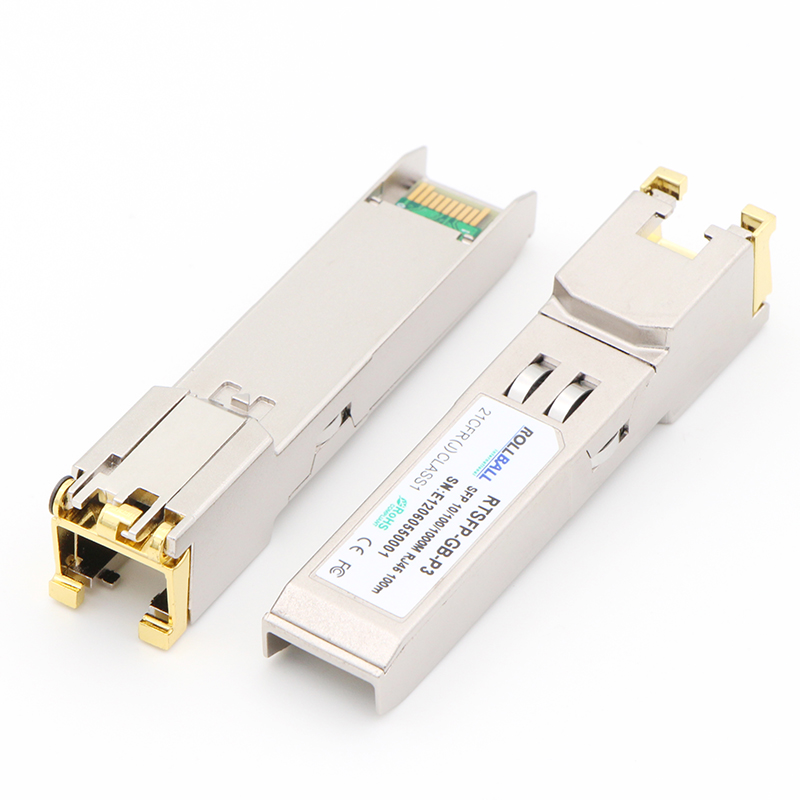
A Copper SFP module (often called a Copper SFP, 1000BASE-T SFP, or RJ45 SFP) is a small device that plugs into a switch, router, or network card to provide a standard Ethernet (RJ45) port using a copper network cable (like the Cat5e, Cat6, or Cat7 cable you use to connect a computer to a wall socket).
It's the copper equivalent of the more common fiber optic SFP module.
Key Details
1. The "SFP" Part
SFP stands for Small Form-factor Pluggable. It's a standardized "slot" or "port" on networking equipment. Think of it like a USB port for networking gear—it allows you to choose the type of connection you need.
The main advantage of SFP ports is their flexibility. You can plug in different types of modules to connect via fiber optic cable for long distances or copper cable for short distances.
2. The "Copper" Part
This specifies the type of cable it uses: standard twisted-pair copper cables with RJ45 connectors (the familiar plastic plug with a clip).
The electrical signaling is standard Ethernet (specifically 1000BASE-T for Gigabit speeds), which is why it's compatible with everyday office wiring and computer network cards.
3. Physical Identification
It looks almost identical to a fiber optic SFP module, but instead of one or two fiber optic ports (LC or SC connectors), it has a single RJ45 Ethernet port.
4. Primary Use Case: Short-Range Connections
The most important characteristic of a Copper SFP module is its limited distance.
Maximum Distance: Typically 100 meters (about 328 feet).
Why? Electrical signals degrade quickly over copper wires. This makes them perfect for:
Connecting a switch to another switch in the same wiring closet or building.
Connecting a switch to a server in the same server rack or data center row.
Providing a few extra RJ45 ports on a switch that mostly has SFP slots.
If you need to connect two buildings that are 500 meters apart, you must use a fiber optic SFP module, as fiber can transmit data over much longer distances (up to tens of kilometers).
5. Speed
The most common type of Copper SFP module supports Gigabit Ethernet (1000 Mbps or 1 Gbps). There are also 10GBASE-T SFP+ modules that support 10 Gigabit speeds over copper, but they are less common, generate more heat, and have a shorter maximum distance (usually 30 meters for Cat6a).
Comparison: Copper SFP vs. Fiber SFP
| Feature | Copper SFP Module | Fiber Optic SFP Module |
| Cable Type | Copper (Cat5e/6/6a/7) | Glass/Plastic Fiber |
| Connector | RJ45 | LC, SC, etc. |
| Max Distance | 100 meters (for 1G) | Up to 160 km (depending on type) |
| Cost | Lower cost for modules and cables | Higher cost for modules and cables |
| Immunity to Interference | Susceptible to EMI (Electrical Noise) | Highly immune to EMI |
| Typical Use | Short-distance, within a building | Long-distance, between buildings, noisy environments |
In short, a Copper SFP module is a flexible adapter that lets you add a standard Gigabit Ethernet (RJ45) port to any device with an SFP slot. It's the ideal, cost-effective solution for short-range network connections up to 100 meters using common copper cabling.
A 10G Copper SFP (often called a 10GBASE-T SFP+ module) is a transceiver that plugs into a network device's SFP+ slot to provide a 10 Gigabit Ethernet (10GbE) port that uses standard RJ45 copper cables (like Cat6, Cat6a, or Cat7).
It allows you to achieve 10 gigabit speeds over the same type of twisted-pair copper cabling you use for standard 1 Gigabit networks, but with stricter requirements on the cable quality.
Key Details Explained
1. The "10G" Part
This stands for 10 Gigabits per second (10 Gbps). It is ten times faster than the common 1 Gigabit (1000BASE-T) Copper SFP module.
The official standard for this is 10GBASE-T.
2. The "SFP+" Part
To handle 10G speeds, this module must be plugged into an SFP+ port. An SFP+ port is the high-speed version of a standard SFP port.
Crucial Compatibility Note: A 10G Copper SFP+ module will not work in a standard 1G SFP slot. It requires an SFP+ slot. However, most SFP+ ports are backward compatible and can accept a slower 1G SFP module.
3. The "Copper" Part
Like its 1G counterpart, it uses copper cables with RJ45 connectors. However, the cable requirements are much more demanding to handle the higher signal frequency.
Most Important Consideration: Cable Requirements and Distance
This is the most critical difference from 1G Copper SFPs. The higher speed means the signal is more susceptible to interference and signal loss (attenuation) over copper.
| Cable Category | Maximum Supported Distance for 10GBASE-T | Notes |
| Cat6 | Up to 55 meters (≈180 feet) | The shorter distance is due to higher "alien crosstalk" interference. Not ideal for new installations. |
| Cat6a (Augmented) | Up to 100 meters (≈328 feet) | This is the recommended standard for 10GBASE-T. It has better shielding to support the full 100m distance. |
| Cat7/7a/8 | Up to 100 meters | These have even better shielding and performance, often used in data centers. |
Important: Using old or low-quality Cat5e cable will not work for 10G speeds. The connection will likely fail or downgrade to 1G.
Comparison: 10G Copper SFP+ vs. Other 10G Options
| Feature | 10G Copper SFP+ (10GBASE-T) | 10G DAC (Direct Attach Copper) | 10G Fiber SFP+ |
| Cable Type | Standard RJ45 (Cat6a/7) | Twinaxial Copper with fixed SFP+ connectors | Fiber Optic (LC Connectors) |
| Max Distance | 100m (with Cat6a) | Very Short (typically 7m or less) | Very Long (up to 80km) |
| Cost | Moderate module cost, low cable cost | Lowest total cost for short runs | Higher module cost, moderate cable cost |
| Flexibility | High - uses ubiquitous RJ45 cabling | None - fixed ends, point-to-point only | High - can choose different distances |
| Power & Heat | High - consumes more power, runs hotter | Very Low | Low |
| Primary Use | Connecting to 10G devices over structured office cabling (e.g., servers, workstations) | Short, fixed links within a single rack or between adjacent racks | Long-distance links between switches in different rooms/buildings |
Advantages and Disadvantages of 10G Copper SFP+
Advantages:
Cabling Familiarity: Uses the same RJ45 cables and patch panels as your existing 1G network, making it easy to integrate if you have the right cable category.
Backward Compatibility: 10GBASE-T ports are typically backward compatible with 1G and 100M devices, so you can connect older equipment without issue.
Disadvantages:
Higher Latency: Slightly higher latency than DAC or fiber options.
Higher Power Consumption: These modules generate significant heat and use more power, which can be a concern in densely packed switches.
Strict Cable Requirements: You must use high-quality Cat6a or better cabling to get the full benefit and distance.
A 10G Copper SFP+ module is the perfect solution when you need to connect a device at 10 Gigabit speeds over a short to medium distance (up to 100m) using standard RJ45 Ethernet cabling. It's commonly used to connect servers, high-end workstations, and switches within a data center or building that has been wired with high-grade (Cat6a) copper infrastructure.

评论
发表评论