What is a 16G CWDM SFP+
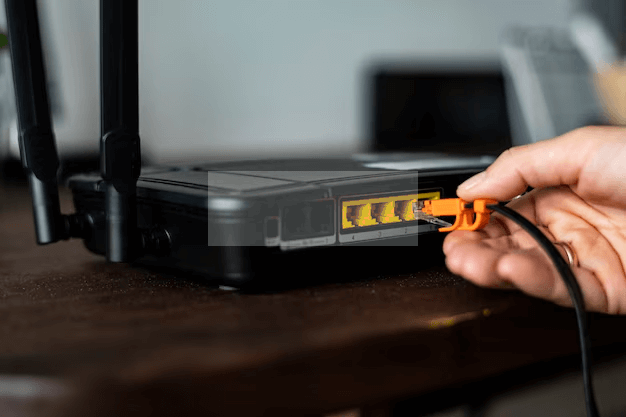
16G CWDM SFP+ is a high-speed, hot-pluggable optical transceiver used for medium-to-long-range data communication over fiber optic cables.
16G: The data rate, which is 16 Gigabits per second (Gbps). This speed is primarily associated with 16G Fibre Channel storage area networks (SANs), but it can also be used in high-speed Ethernet links.
CWDM: Stands for Coarse Wavelength Division Multiplexing. This is a technology that allows multiple optical signals (each with a different wavelength, i.e., color of light) to be transmitted simultaneously on a single fiber. "Coarse" means the wavelengths are spaced wider apart (typically 20nm) than in Dense Wavelength Division Multiplexing (DWDM), making these modules more cost-effective.
SFP+: The physical form factor. It's an enhanced version of the SFP, supporting higher speeds (up to 16Gbps). It's a small, hot-pluggable module that inserts into a switch, router, or network card.
How It Works
1.Core Function: It converts electrical signals from a network device into optical light signals and transmits them over a fiber cable. On the receiving end, another module converts the light signals back into electrical signals.
2.The Power of CWDM:
Each 16G CWDM SFP+ module is assigned a specific, fixed wavelength (e.g., 1470nm, 1490nm, 1510nm... up to 1610nm).
You can use different wavelength modules at each end of a link.
By using a passive device called a CWDM Mux/DeMux (Multiplexer/De-multiplexer), you can combine up to 18 different 16G channels onto a single pair of fibers (or even a single fiber for bi-directional models).
The advantages of 16G CWDM technology are significant, especially when compared to standard grey (colorless) optical links. They around cost-efficiency, scalability, and maximizing existing infrastructure.
Here are the key advantages of using 16G CWDM:
1. Massive Fiber Capacity Savings (The Primary Advantage)
What it is: CWDM allows you to transmit multiple independent 16G channels (up to 18) over a single pair of fibers, or even a single fiber.
Benefit: This eliminates the need to install new dark fiber for every new connection. If you have limited fiber conduits or leasing dark fiber is expensive, CWDM multiplies your existing fiber capacity by up to 18x. This results in enormous cost savings on civil engineering and fiber leasing.
2.Cost-Effectiveness for Medium-Range Distances
What it is: CWDM optics and the passive Mux/DeMux units are less expensive than their Dense Wavelength Division Multiplexing (DWDM) counterparts.
Benefit: For enterprise and data center interconnect applications where distances are typically 40km to 80km, 16G CWDM provides the perfect balance of performance and cost. You get the benefits of wavelength division multiplexing without the high cost of DWDM systems, which are designed for much longer distances and higher channel counts.
3. Simplified Scalability and Flexibility
What it is: You can start with a single 16G channel (e.g., 1510nm) and easily add more capacity (e.g., 1530nm, 1550nm) as your needs grow. This is done simply by adding new transceiver pairs and connecting them to the passive Mux/DeMux.
Benefit: This allows for a "pay-as-you-grow" network expansion strategy. You don't need to make a huge initial investment. It's easy to scale your network capacity without disrupting existing services, making it highly flexible for growing businesses.
4. Protocol and Rate Transparency
What it is: The CWDM layer operates independently of the data protocol being carried. The light wavelength doesn't care what data it's transporting.
Benefit: A single CWDM infrastructure can simultaneously support a mix of different services. For example, you can run 16G Fibre Channel for your storage network (SAN) and 1G/10G Ethernet for your data network over the same set of fibers, using different wavelengths. This consolidates multiple networks into one physical infrastructure.
5. Improved Reliability with Passive Components
What it is: The core of a CWDM system—the Mux/DeMux—is a passive device. It has no electronics, no power requirements, and no software. It works purely on the principles of optical physics.
Benefit: Passive components are extremely reliable and have a very long mean time between failures (MTBF). This simplifies the network design, reduces potential points of failure, and lowers operational costs since there is no power or cooling required for these units.
6. Simplified Fiber Management
What it is: Instead of managing dozens of individual fiber strands for multiple connections, you manage a single or a pair of fibers that carry all your traffic.
Benefit: This drastically reduces the complexity of fiber patch panels and cable management. Troubleshooting and documentation also become simpler.
Summary Comparison Table
| Feature | Standard 16G (Grey) | 16G CWDM | Advantage of CWDM |
| Fiber Usage | 1 fiber pair per link | 1 fiber pair for up to 18 links | Massive fiber savings |
| Cost | Low per-module cost, but high fiber cost | Higher per-module cost, but low fiber cost | Lower Total Cost of Ownership for medium-range |
| Scalability | Requires new fibers | Add new wavelengths on same fibers | "Pay-as-you-grow" flexibility |
| Network Consolidation | Separate physical networks | Converge SAN & LAN on one fiber | Simplified infrastructure |
| Typical Reach | Up to 10km-40km | Up to 40km-80km (or more) | Better long-distance performance |
In conclusion, the primary advantage of 16G CWDM is its ability to multiply the capacity of your existing fiber infrastructure, providing a cost-effective, scalable, and reliable solution for high-speed storage and data networks over metropolitan-area distances.
Key Characteristics
High Speed: Provides a dedicated 16.0 Gbps line rate.
Long Reach: Typical transmission distances are 40 kilometers to 80 kilometers, depending on the module's power and fiber type.
Fiber Efficiency: CWDM technology allows for multiple channels on one fiber pair, maximizing infrastructure investment.
Hot-Pluggable: Can be inserted or removed from a compatible SFP+ port without powering down the equipment, allowing for easy maintenance and upgrades.
Typical Applications
16G CWDM SFP+ modules are used in environments requiring high-speed, medium-to-long-distance links where fiber conservation is critical:
1.Storage Area Networks (SANs): Interconnecting data centers and disaster recovery sites over 16G Fibre Channel.
2.Data Center Interconnect (DCI): Linking data centers across a metropolitan area for data replication and backup.
3.Telecom & Metro Networks: Used in the aggregation layers of metropolitan area networks (MANs).
A 16G CWDM SFP+ is an optical transceiver, in the SFP+ form factor, that operates at 16 Gbps, uses CWDM technology to save fiber resources, and is designed for long-haul connections up to 80 km. It is a critical component for building efficient and cost-effective high-speed networks over distance.

评论
发表评论