What is Fast fiber optic connector? How it works?
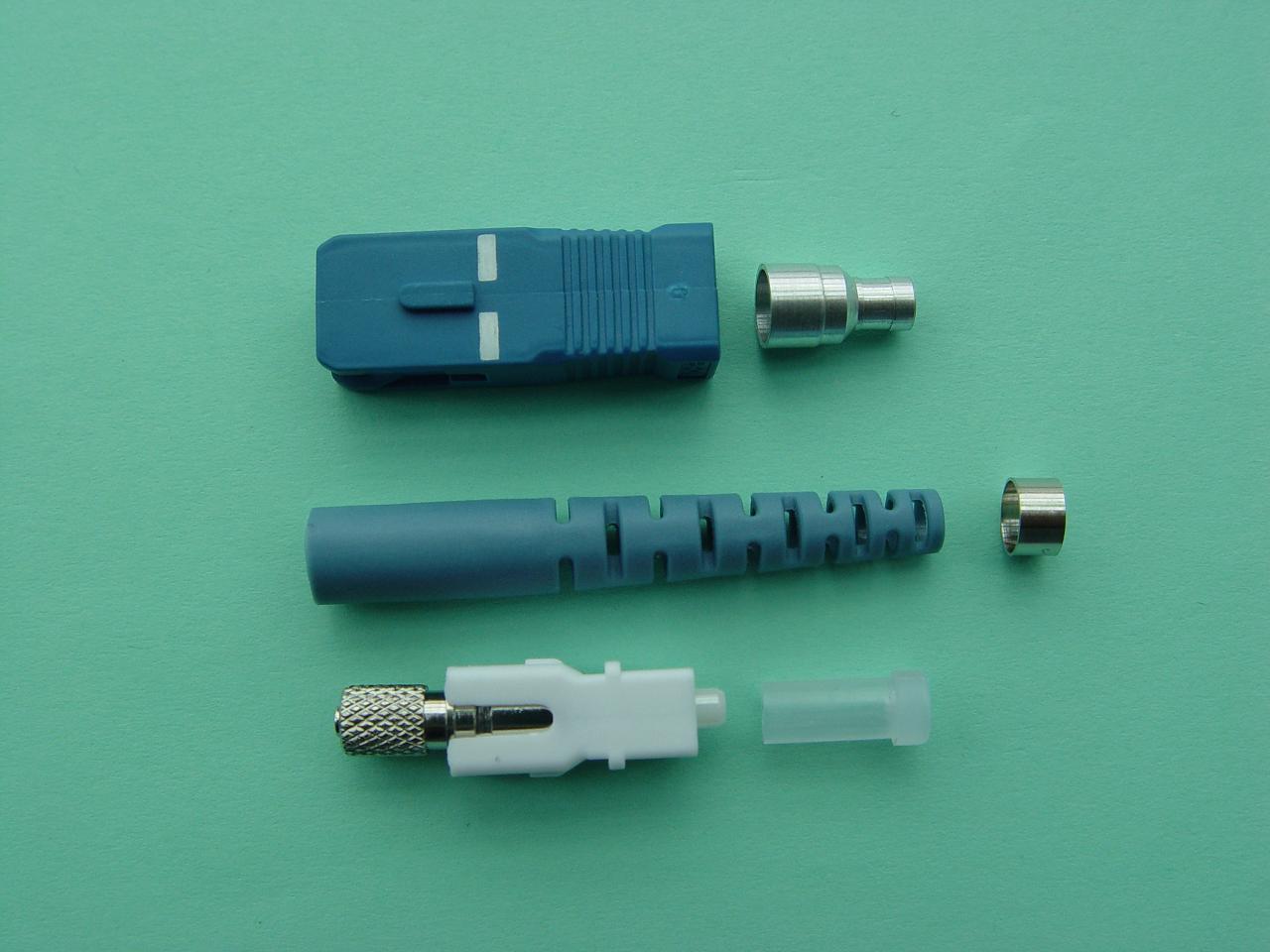 A Fast Fiber Optic Connector refers to a type of connector designed for the quick and easy termination of fiber optic cables, significantly reducing the installation time and skill level required compared to traditional methods.
The Core Idea: What Makes it "Fast"?
Traditional fiber connector installation (like for SC or LC connectors) is a slow, delicate process. It involves:
1. Stripping the cable.
2. Cleaving (making a perfect, square break) the fragile glass fiber.3. Epoxying the fiber into the connector.
4. Curing the epoxy (which takes time).
5. Finally, polishing the end-face to a mirror finish to ensure low light loss.
This process requires specialized tools and a skilled technician.
A Fast fiber optic Connector simplifies this dramatically by integrating the cleaving and polishing steps into the connector itself or eliminating them entirely.
How Do Fast Fiber Optic Connectors Work?
The magic lies in the pre-polished ferrule and an internal mechanical splice. Here is the typical step-by-step process:Key Components of a Fast Connector:
1.Pre-Polished Ferrule: The heart of the system. This is a ceramic or metal tip that is already perfectly polished at the factory.
2.Internal V-Groove & Mechanical Splice: Inside the connector body, there is a precise groove that holds the stripped fiber in perfect alignment with the pre-polished ferrule.
2.Internal V-Groove & Mechanical Splice: Inside the connector body, there is a precise groove that holds the stripped fiber in perfect alignment with the pre-polished ferrule.
3.Cleaving Tool (often included): A simple, handheld tool that scores and snaps the fiber to the correct length.
4. Crimp Mechanism: To secure the cable's strength members (like aramid yarn) and jacket for strain relief.
The "Fast" Installation Process:
1. Prepare the Cable: Strip the outer jacket and buffer tube of the fiber cable to expose the bare glass fiber.
2. Cleave the Fiber: Using the simple, dedicated cleaver, score and break the fiber to a pre-determined length. This is a quick, one-step action.
3. Insert the Fiber: The technician simply inserts the freshly cleaved fiber into the back of the fast connector until it stops. The internal V-groove aligns it perfectly.
4. Activate the Mechanism: This is the crucial step. The technician either:Closes a Lever (like a push-to-connect electrical connector).
Pushes a Slide forward.
Crimps the connector with a tool.
This action does two things:
It forces the fiber forward until it butts against the pre-polished fiber stub inside the ferrule.
It clamps down with the mechanical splice, permanently holding the fiber in place and creating a continuous light path.
5.Secure the Cable: Finally, the strength members and cable jacket are crimped to make the connection robust and strain-resistant.
The entire process can take less than 2 minutes per connector and requires no epoxy, no polishing, and no curing.
Specific Examples to Make it Concrete
Let's look at two of the most common and important types of fast connectors.Example 1: Fiber Optic Fast Connector (e.g., an LC Connector)
This is critical for your internet, phone, and TV services.What it does: Joins the end of a hair-thin glass fiber to another fiber or a network device with extreme precision to transmit light signals.
How it works:
1.The fiber is pre-terminated with a ceramic ferrule that holds it perfectly aligned.
2.To connect, you simply push the connector into an adapter port on a panel or device.
3.The connector housing has a latch that snaps into the adapter, holding it securely. This precise alignment is crucial; even a micron of misalignment can cause signal loss.
4.To disconnect, you press down on the small, tab-like latch on the top of the connector to release it, and then pull it out.
Why it's "fast": It allows technicians to install or reconfigure networks in seconds without needing to splice or polish fibers on-site.
Example 2: Electrical Push-In Connector (e.g., in a WAGO Lever-Nut)
This is a modern replacement for wire nuts in electrical boxes.What it does: Connects multiple electrical wires safely.
How it works:
1.You lift a small lever on the connector.
2.You push the stripped end of a straight wire into the open hole.
3.You close the lever. Inside, a spring-loaded clamp grabs the wire, creating a secure and gas-tight electrical connection.
4.To disconnect, simply lift the lever and pull the wire out.
Why it's "fast": It's dramatically faster and easier than twisting wire nuts, especially in tight spaces, and allows for easy reconfiguration.
Example 3: Pneumatic/Hydraulic Quick Coupler
Used with air or fluid lines in factories, automotive shops, and agriculture.What it does: Connects a hose to a tool or another hose instantly.
How it works:
1.The female part (the coupler) has a ring of ball bearings inside, held in place by a sliding sleeve.
2.When you push the male part (the plug) into the coupler, it pushes against an internal valve and the ball bearings snap into a groove on the plug, locking it.
3.This action also opens the internal valves, allowing air or fluid to flow.
4.To disconnect, you pull back the sliding sleeve on the coupler, which retracts the ball bearings and allows you to pull the plug out.
Why it's "fast": Tools can be changed in seconds without shutting down the entire system or getting covered in fluid.
Common Types of Fast Fiber Optic Connectors
You will find fast versions of the most popular connector styles:Fast LC: Very common in data centers and telecom for its small size.
Fast SC: Often used in fiber-to-the-home (FTTH) installations.
Fast ST: Less common, but used in some older enterprise networks.
They are also available for singlemode (long-distance) and multimode (short-distance) fibers.
Key Advantages & Disadvantages
Advantages:
Speed: Drastically reduces installation time (from ~10-15 minutes to ~2 minutes).
Ease of Use: Lower skill requirement; less training needed.
Portability: Ideal for field technicians as the tool kit is small and portable (no need for heavy polishers or power for curing ovens).
Cost-Effective: Reduces labor costs significantly.
Disadvantages:
Slightly Higher Loss: The point where the field fiber meets the pre-polished stub (the "mechanical splice") inherently has a slightly higher signal loss (~0.3 dB to 0.5 dB) compared to a perfectly factory-polished connector. This is usually acceptable for most applications.
Consistency: The quality of the cleave is critical. A poor cleave made in the field can lead to a bad connection, whereas factory polishing is highly consistent.
Cost per Unit: The connectors themselves are more expensive than traditional, bare connectors (though this is often offset by the labor savings).
Where Are They Used?
Fast connectors are the go-to solution for:
Fiber-to-the-Home (FTTH / XGS-PON): Installing and repairing connections in residential and business premises.
Field Service Technicians: For quick repairs, drops, and network reconfigurations.
Data Center Patches: Making custom-length patch cords on the fly.
Emergency Restoration: Quickly restoring service after a fiber break.
In summary, a Fast Fiber Optic Connector is a revolutionary tool that democratizes fiber termination, making it as close to "plug-and-play" as possible by moving the complexity from the field and into the connector's own design.

评论
发表评论