Something about Industrial SFP module
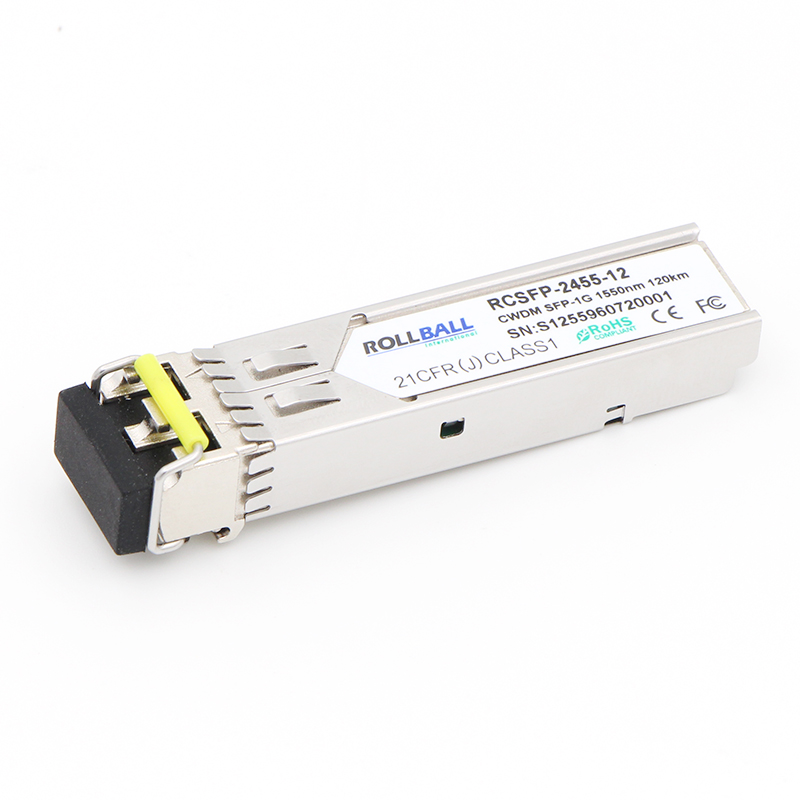 An Industrial SFP (Small Form-factor Pluggable) module is a specialized optical transceiver designed to operate reliably in harsh environmental conditions that would cause standard commercial SFP modules to fail. Think of it as the "ruggedized" version of the common data center SFP.
The Simple Analogy:
Standard SFP = A regular car for city roads (0°C to 70°C environment)Industrial SFP = An Arctic expedition vehicle with heavy-duty components (-40°C to 85°C environment)
Key Differentiating Features: The "Industrial" Hardening
1.Extended Temperature Range:Commercial (C-temp): 0°C to 70°C (32°F to 158°F)
Industrial (I-temp): -40°C to 85°C (-40°F to 185°F)
This is the most critical specification. They must withstand extreme cold (e.g., frozen tundra, unheated warehouses) and extreme heat (e.g., factory floors, solar exposure in enclosures).
2.Enhanced Component Quality & Design:
Uses industrial-grade ICs, lasers, and capacitors rated for the extended temperature range.
More robust thermal management and often a tighter-sealed casing to prevent condensation.
3.Superior Protection Against Contaminants & Vibration:
Better resistance to dust, moisture, and corrosive gases (though not inherently waterproof; that's for SFP modules in hardened connectors).
Designed to withstand higher levels of shock and vibration common in industrial settings (e.g., near heavy machinery, on trains, in mining).
4.EMI/ESD Protection:
Enhanced electromagnetic interference (EMI) shielding and electrostatic discharge (ESD) protection to ensure stable operation in electrically noisy environments.
Types of Industrial SFP Modules
Industrial SFP modules come in various types categorized by fiber mode, wavelength, distance, and connector type. Here's a comprehensive breakdown:1. By Fiber Mode & Distance
A. Multimode Industrial SFPs (Short Distance)
| Type | Wavelength | Fiber Type | Max Distance | Typical Application |
| 1000BASE-SX | 850nm | MM (OM1/2/3) | 550m | Factory floor, within building |
| 100BASE-FX | 1310nm | MM (OM1) | 2km | Legacy industrial networks |
| 10G-SR+ | 850nm | MM (OM3/4) | 400m | High-speed industrial backbone |
B. Single-mode Industrial SFPs (Long Distance)
| Type | Wavelength | Fiber Type | Max Distance | Typical Application |
| 1000BASE-LX | 1310nm | SM | 10km | Campus, industrial park |
| 1000BASE-EX | 1310nm | SM | 40km | City-wide, pipeline networks |
| 1000BASE-ZX | 1550nm | SM | 80km | Long-haul (rail, power grid) |
| 1000BASE-EZX | 1550nm | SM | 120-160km | Ultra-long distance |
| 10G-LR | 1310nm | SM | 10km | High-speed backbone |
| 10G-ER | 1550nm | SM | 40km | Long-distance 10G links |
2. By Wavelength Technology
A. Standard Wavelength
850nm - Multimode only1310nm - Both single-mode and multimode
1550nm - Single-mode only
B. CWDM Industrial SFPs
Coarse Wavelength Division Multiplexing8 wavelengths: 1470nm, 1490nm, 1510nm, 1530nm, 1550nm, 1570nm, 1590nm, 1610nm
Use: Combine multiple signals on one fiber (up to 8 channels)
Application: Maximize fiber utilization in industrial backbone networks
C. DWDM Industrial SFPs
Dense Wavelength Division Multiplexing40+ wavelengths (channel spacing 0.8nm or 0.4nm)
Use: Very high density fiber multiplexing
Application: Telecom-grade industrial networks, utility backbones
D. BIDI (Bidirectional) Industrial SFPs
Single fiber operation - Transmit and receive on different wavelengths over ONE fiberCommon pairs: 1310nm/1550nm, 1490nm/1550nm
Advantage: Saves 50% on fiber infrastructure
Application: Fiber-constrained industrial sites
3. By Data Rate/Speed
| Data Rate | Common Types | Industrial Applications |
| Fast Ethernet (100M) | 100BASE-FX, 100BASE-LX | Legacy PLC networks, older systems |
| Gigabit (1G) | 1000BASE-SX/LX/EX/ZX | Most common industrial applications |
| 2.5G | 2500BASE-X, 1000BASE-BX | Industrial video surveillance, some automation |
| 10 Gigabit (10G) | 10G-SR/LR/ER | Backbone, high-speed machine vision |
| 25 Gigabit | 25G-SR/LR | Emerging in advanced manufacturing |
4. By Connector & Media Type
A. Fiber Connector Types
| Connector | Description | Industrial Advantage |
| LC Duplex | Most common, two LC connectors | Standard, widely available |
| LC Simplex | Single LC for BIDI SFPs | Saves panel space |
| SC | Less common today, older systems | Legacy industrial equipment |
B. Copper/RJ45 Industrial SFPs
1000BASE-T: Gigabit over copper, up to 100m100BASE-TX: Fast Ethernet over copper
Industrial hardening: Extended temp, surge protection
Application: Connecting industrial devices with RJ45 ports over longer distances than standard Ethernet
C. Industrial SFP-to-Fiber Converters
Not technically SFPs, but related:Media converters with hardened enclosures containing industrial SFPs
M12 or screw-lock connectors for vibration resistance
IP67 rated for waterproof/dustproof applications
5. Specialized Industrial Types
A. Extended Temperature Range Models
| Grade | Temperature Range | Applications |
| Industrial Standard | -40°C to 85°C | Most industrial uses |
| Extended Industrial | -45°C to 95°C | Extreme environments |
| Automotive Grade | -40°C to 105°C | Transportation, vehicles |
B. Hazardous Location SFPs
Explosion-proof designs (for Class I Div 2 areas)Intrinsically safe options (limited energy)
Certifications: ATEX, IECEx for oil/gas, mining
C. Railway Certified SFPs
EN 50155 certified (railway applications)EN 50121-3-2 (EMC for railway)
Shock/vibration: EN 61373 certified
Application: Train control systems, signaling
D. PoE (Power over Ethernet) Industrial SFPs
Unique hybrid: SFP + PoE injectorProvides both fiber uplink and PoE power
Application: Powering remote IP cameras/access points over fiber networks
6. By Vendor/Protocol Compatibility
| Compatibility | Description | Key Industrial Brands |
| Multi-vendor | Works across brands (using coding) | Generic, szrollball.com, Smartoptics |
| Cisco Industrial | Coded for Cisco IE switches | Cisco Industrial Ethernet |
| Siemens | For Scalance X switches | Siemens Industrial Networking |
| Moxa | For Moxa industrial switches | Moxa |
| Hirschmann | For Belden/Hirschmann switches | Belden Industrial |
| Allen-Bradley | For Stratix switches | Rockwell Automation |
7. Monitoring Capability Types
A. With DDM/DOM
Digital Diagnostics MonitoringMonitors: Temperature, voltage, TX/RX power, laser bias
Essential for predictive maintenance in industrial settings
SNMP readable for network management systems
B. Without DDM/DOM
Basic monitoring onlyLower cost
For less critical applications
Selection Guide: Which Type for Your Application?
| Application Scenario | Recommended Industrial SFP Type |
| Factory floor network | 1000BASE-SX (multimode) |
| Between buildings (<10km) | 1000BASE-LX (single-mode) |
| Pipeline/rail monitoring (>40km) | 1000BASE-EX or ZX |
| Limited fiber available | BIDI SFP (single fiber) |
| High bandwidth backbone | CWDM or 10G-LR |
| Hazardous area (oil/gas) | ATEX-certified SFP |
| Moving equipment/vibration | Railway-certified SFP |
| Remote monitoring with PoE | Industrial PoE SFP |
| Legacy 100M network | 100BASE-FX/LX |
Key Purchase Considerations:
1.Verify exact temperature rating needed for your environment2.Match fiber type (OM1/OM3 for MM, OS2 for SM)
Check distance requirements with margin (don't use 10km SFP for 9.5km link)
3.Ensure switch compatibility (vendor coding)
4.Prioritize DDM/DOM for industrial monitoring
5.Consider certifications if required by industry regulations
6.Buy from industrial specialists not general networking suppliers
Industrial SFPs may cost 2-3× more than commercial equivalents, but the reliability in harsh environments justifies the investment for critical operations where downtime costs thousands per hour.
Typical Applications & Industries
Industrial SFPs are found anywhere networks exist in non-climate-controlled environments:Factory Automation & Process Control: PLC networks, robotic cells.
Oil & Gas: Remote wellheads, refineries, pipelines.
Power Utilities & Smart Grids: Substations, power generation plants.
Transportation: Railway signaling, traffic management, onboard vehicle networks.
Mining: Operations in pits and processing plants.
Outdoor Wireless & Telecom: Cell towers, microwave backhaul.
Military & Defense: Field deployable communications.
Industrial SFP vs. "Hardened" Connector Systems
Don't confuse an Industrial SFP with a fully sealed media converter or device. An Industrial SFP plugs into a switch's SFP cage, which is still somewhat exposed. For truly outdoor or wash-down environments, the entire switch must be industrial-rated (in an IP67 enclosure), or you use a media converter with a hardened (e.g., M12 or screw-lock) fiber connector that contains an industrial SFP inside.Industrial SFP modules are essential components for building reliable networks in harsh environments. Their primary value is extended temperature operation and enhanced durability, ensuring network integrity for critical industrial automation and infrastructure applications where failure is not an option.
When designing an industrial network, always specify industrial-grade switches and the corresponding industrial SFP modules for complete end-to-end reliability.

评论
发表评论